

Light follows space, use, and the course of the day
Modern lighting control goes beyond simple switching and dimming. The key lies in the interplay between sensors, natural light, room occupancy, and usage. one.work CORE processes this information centrally and controls lighting across zones based on actual needs.
Situation
Lighting Must Do More Than Just Turn On and Off and Dime
Modern buildings consist of zones with different uses, changing occupancy patterns, and varying daylight conditions. Rigid on/off settings or isolated group controls can only meet these requirements to a limited extent.
What matters most is how lighting responds across interconnected areas. Transition zones, circulation areas, and open floor plans should not be controlled independently of one another if doing so results in visible light-dark transitions or unsettling lighting conditions.
Solution
Centralized Lighting Control for Connected Areas
onework CORE centrally evaluates sensor data, occupancy, and daylight and uses this information to generate the necessary control commands. These commands are transmitted via DALI gateways to the connected luminaires and lighting groups and implemented across all zones.
Tunable White, Human Centric Lighting, scenes, and manual override can also be integrated into the same control architecture. After a manual intervention, the system can return to the defined automatic mode in a controlled manner.
Across zones
Depending on daylight
Available natural light is taken into account, and artificial lighting is adjusted accordingly.
Heavy-use
Reproducible
Identical input conditions result in defined and predictable lighting responses.
Benefits
Lighting control that combines comfort and efficiency.
Greater visual comfort
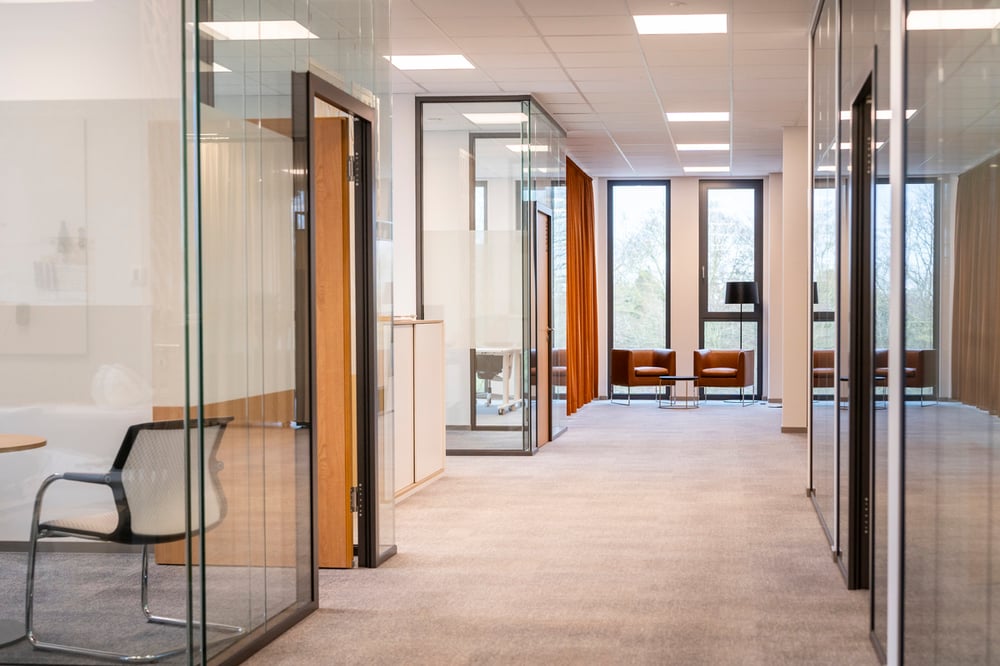
Carefully balanced light levels and smooth transitions between adjacent areas reduce abrupt changes in brightness and enhance the perception of space.

Greater Energy Efficiency
Occupancy, natural light, and usage are automatically taken into account. Lighting is activated only where and when it is actually needed, and at the appropriate intensity.
More Flexibility
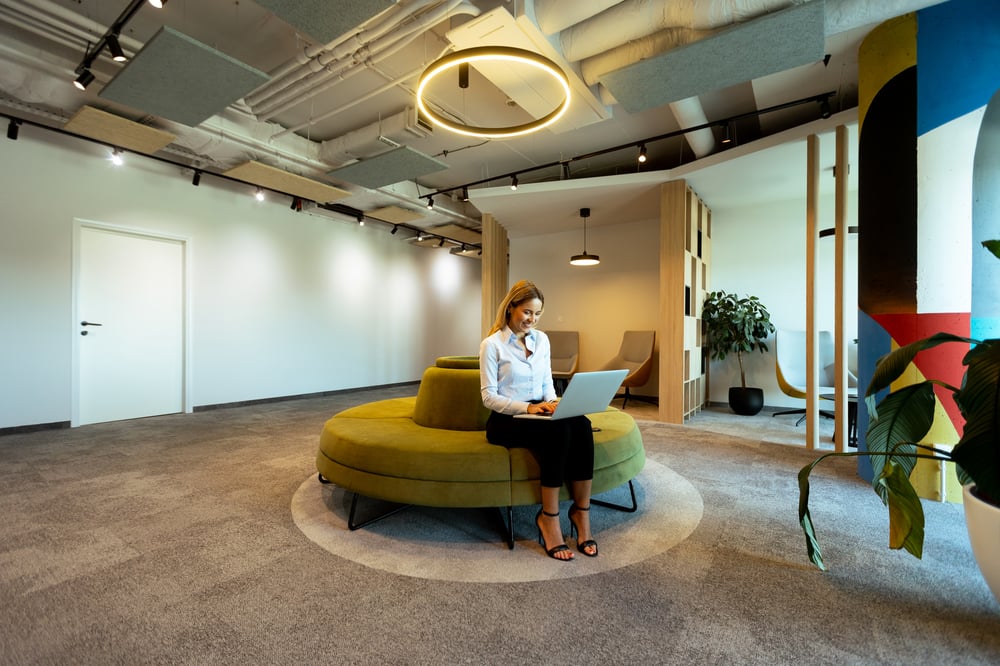
Scenes, Tunable White, and various operating modes can be configured to meet specific project requirements and adjusted at any time.

Greater Operational Reliability
Well-defined system logic, clearly separated control and execution levels, and reproducible lighting conditions simplify planning, commissioning, and operation.

Greater convenience during manual operation
Users can override automatic processes as needed without losing the underlying system logic.
Higher Quality Across Zones
LED technology, demand-based control, and optimized operating hours reduce unnecessary energy consumption during normal operation.
Visualization
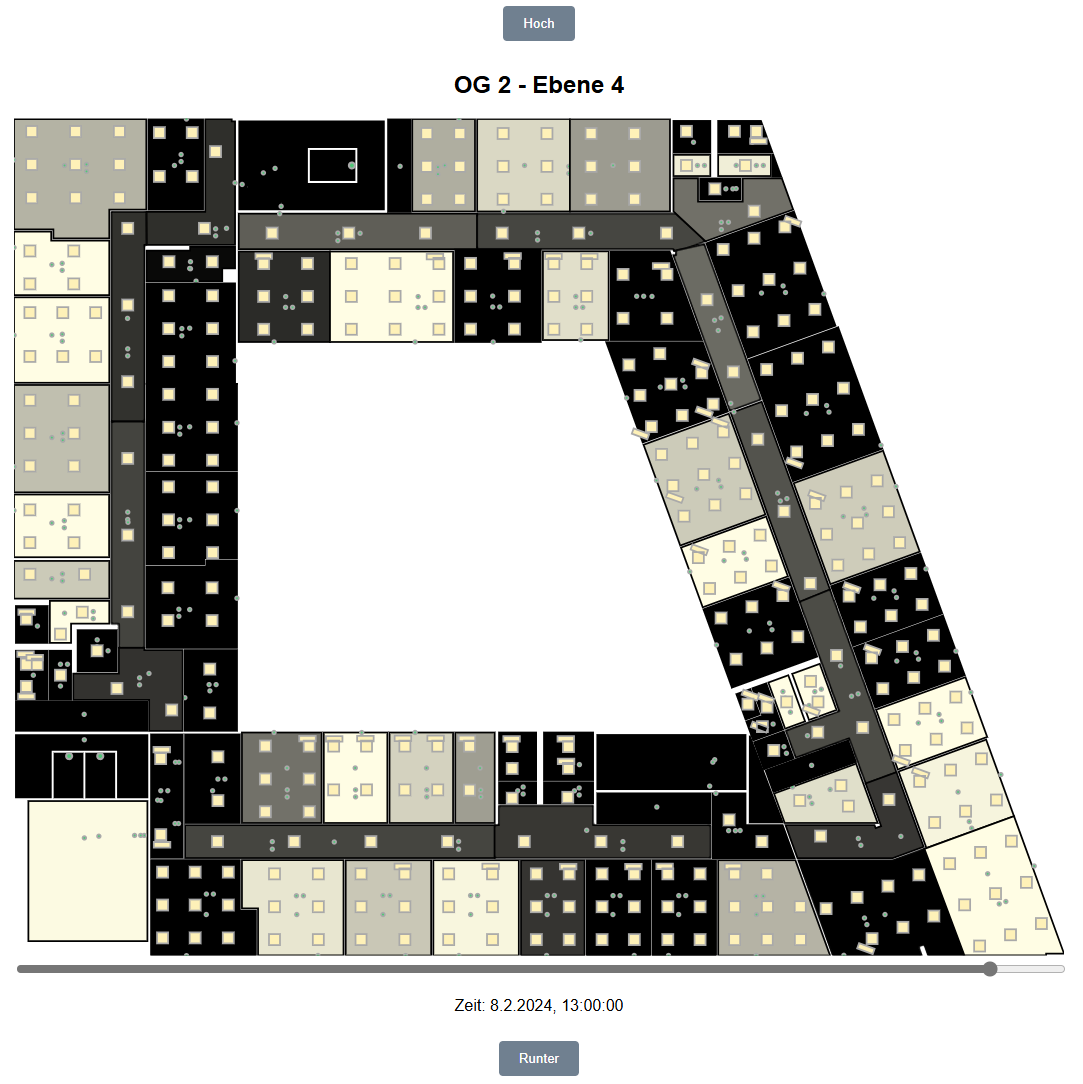
The Guard is a digital twin of the KNX building. This allows you to see on a screen from a central location which device is currently doing what and where any malfunctions are occurring.
Optimized Building Operations
Problems are not only identified, but also proactively resolved.
Energy Conservation
Targeted recommendations help minimize energy losses.
Improved Quality of Life
An optimal indoor climate enhances occupants' well-being.
Easy Integration
Quick and easy to set up thanks to the ETS project file.
How Lighting Control Works
Sensors, central logic, actuators, lighting, and controls all work together to form a coordinated lighting control system.
.png?width=400&height=400&name=using%20(84).png)
.png?width=400&height=400&name=using%20(86).png)
Processes the information and handles the central lighting logic.
.png?width=400&height=400&name=using%20(90).png)
.png?width=400&height=400&name=using%20(85).png)
They implement switching, dimming, scene, and Tunable White commands and form the execution layer of the lighting system.
Allows you to manually adjust brightness, scenes, and other lighting functions right in the room.
Open to Various Actuators
Lighting control is not limited to DALI. Depending on the project, other suitable KNX actuators and lighting interfaces can also be integrated. The key is integration into the central automation logic of onework CORE.
More About Lighting Control
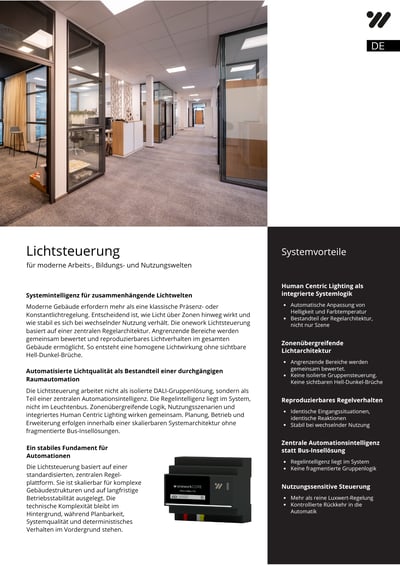
For more detailed information on system logic, cross-zone control architecture, and the integration of Human Centric Lighting, please see our fact sheet on lighting control.
Integrating Lighting Control Seamlessly Into the Project
Talk to us about cross-zone lighting control, Human Centric Lighting, sensor technology,
and integration into your KNX- and DALI-based building automation systems.

