

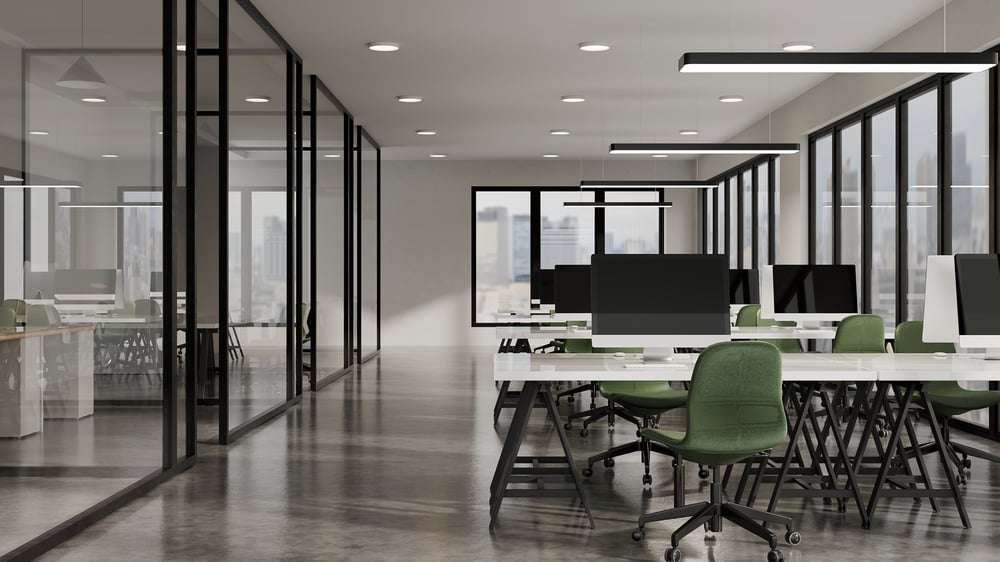
Individual & Group Offices
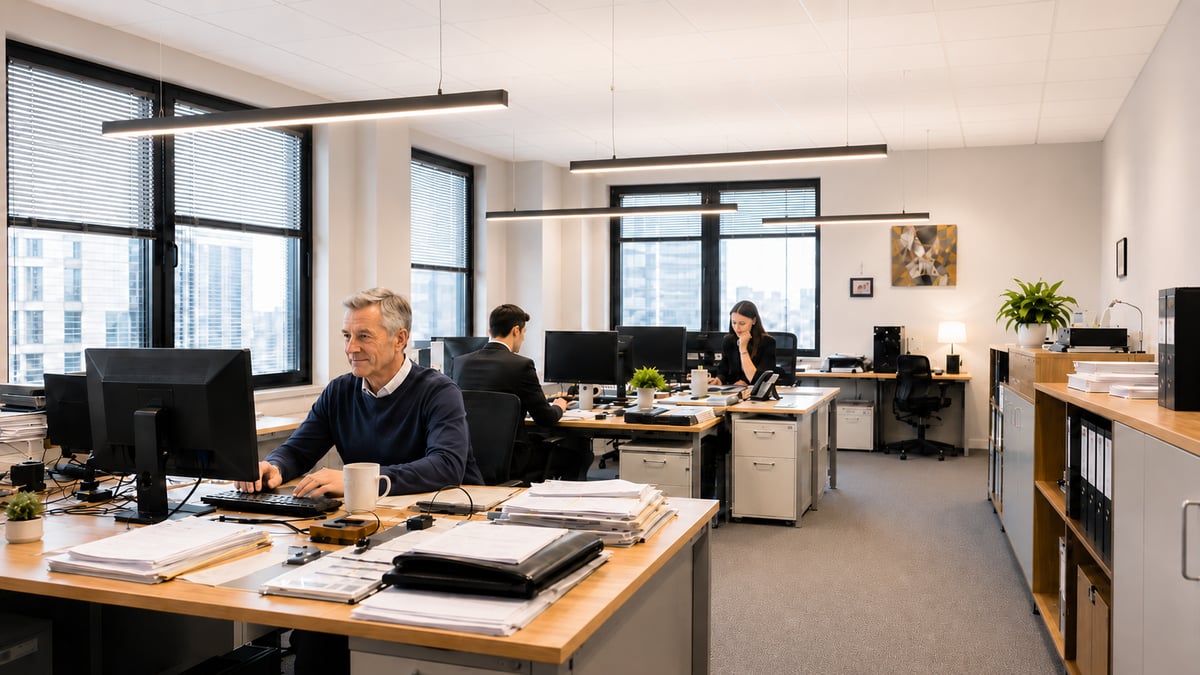
Workplaces require uniform, glare-free lighting and a lighting system that accommodates different tasks and individual needs.
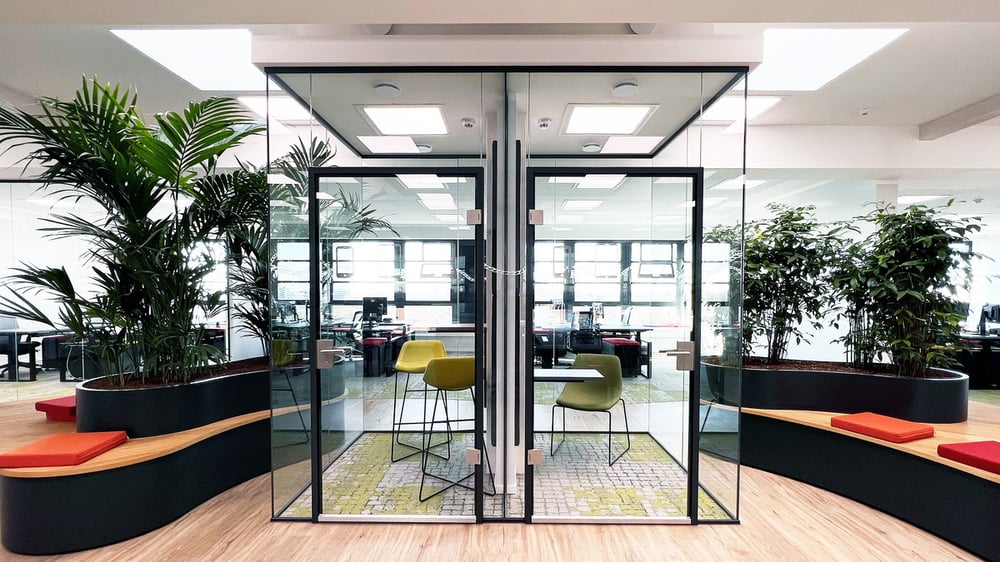
Open Space
Open spaces thrive on clearly defined zones. Lighting and spatial functions should flexibly support workspaces, communication areas, and changing uses.
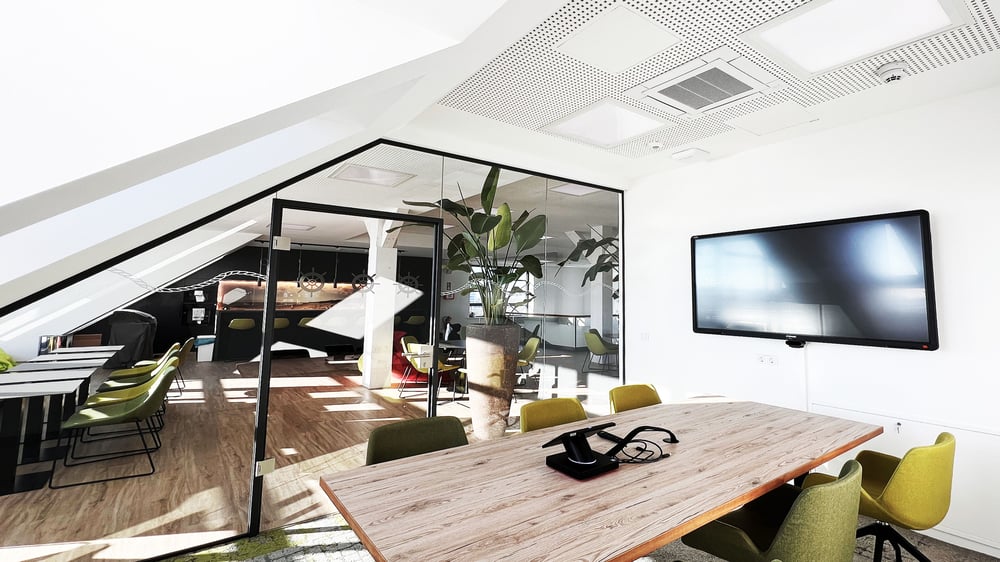
Meeting Rooms
Meetings, presentations, and video conferences each have different requirements for lighting, sun protection, and operation. Scenes create clear and reproducible conditions for these situations.
.jpg?width=1000&height=560&name=modern-minimalist-office%20(1).jpg)
Reception & Communication
This is where orientation, representation, and atmosphere come together. Lighting sets accents, enhances the spatial effect, and creates a clear transition to adjacent areas.
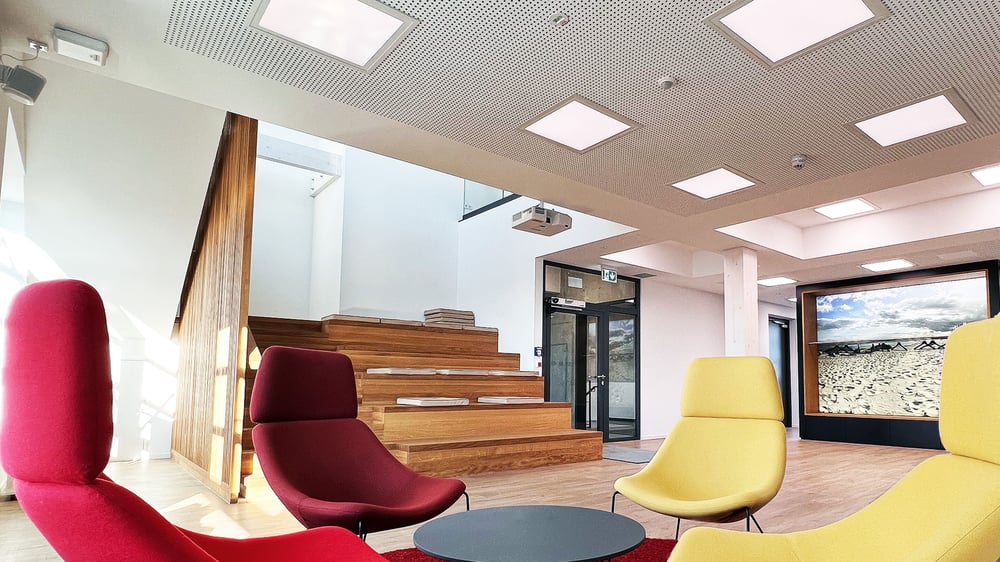
Lounge Areas
Break and communication areas require a different lighting effect than traditional workstations. A key factor is creating a pleasant environment and adapting to changing uses.
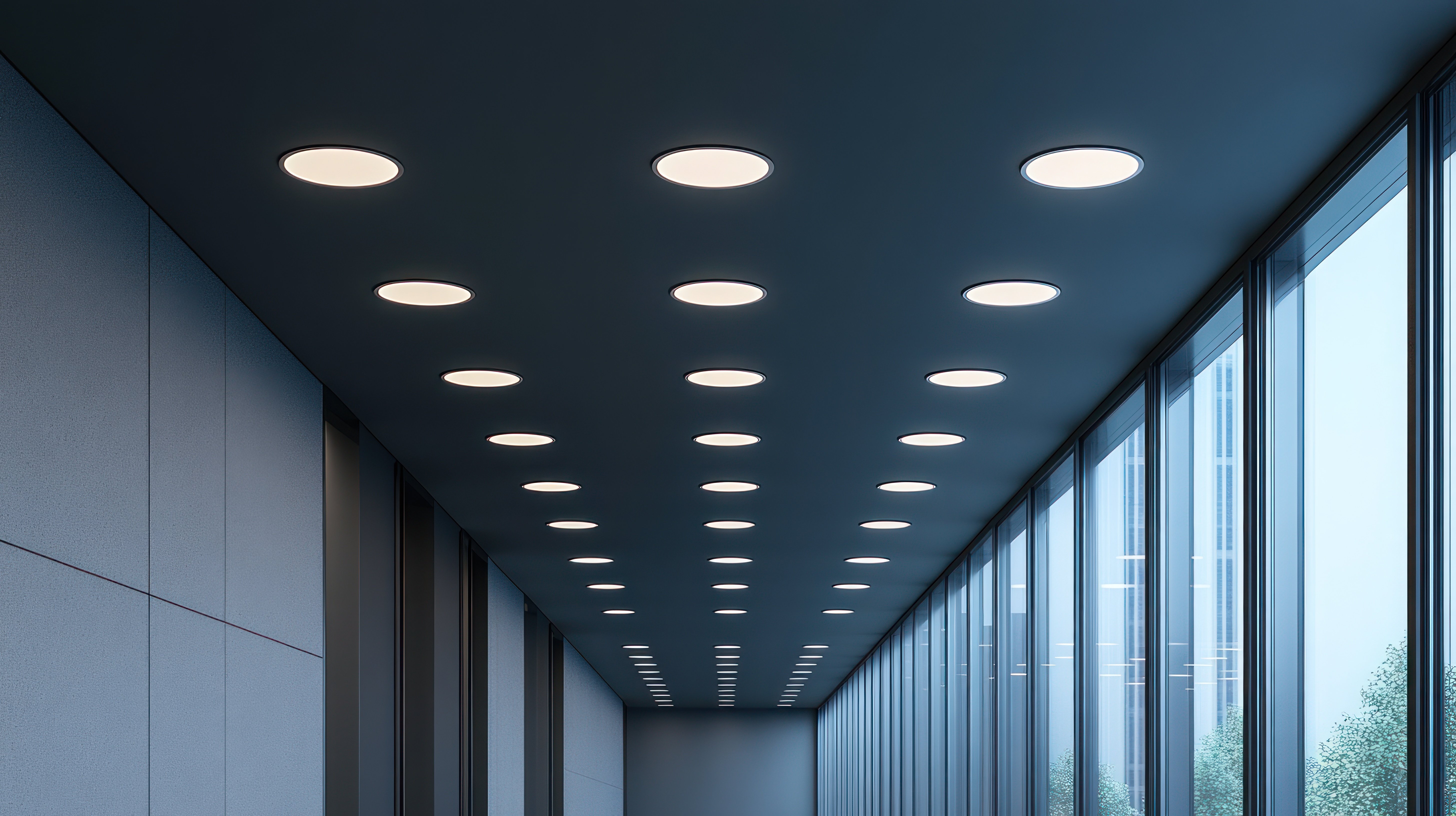
Hallways & Common Areas
Circulation areas and ancillary spaces connect different zones. Lighting and automation should be tailored to usage, occupancy, and adjacent areas, without running at full capacity all the time.

Better Concentration
Dynamic lighting conditions can promote alertness and help people concentrate on their work. Light quality plays a particularly important role during periods of high cognitive demand.

Greater visual comfort
Appropriate illuminance levels, suitable light colors, and effective glare control improve visual conditions and reduce eye strain during computer work.

Greater Well-Being
Lighting that more closely follows the natural rhythm of the day helps create a more pleasant work environment and can have a positive effect on mood and satisfaction.

Greater Mindfulness
Stimulating light can help maintain alertness and attention, especially in the morning and in the afternoon.

Greater Energy Efficiency
LED technology, the use of natural light, and demand-based controls reduce unnecessary operating times and lower energy consumption.

More Flexibility
Different activities, room zones, and usage times can be supported with appropriate lighting and room scenarios without requiring rigid operating modes.
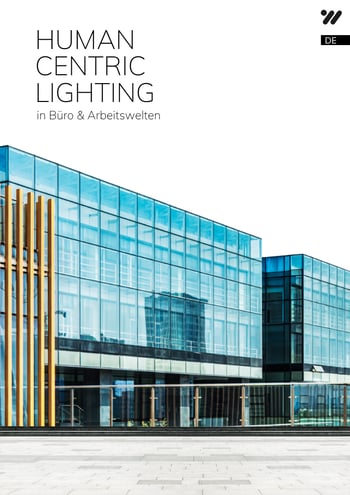
More About Human Centric Lighting in Office and Work Environments
For more detailed information on the effects, applications, and planning of Human Centric Lighting in office and work environments, please see our application brochure.
.png?hsLang=en)
.png?hsLang=en)
.png?hsLang=en)
.png?hsLang=en)
.png?hsLang=en)
.png?hsLang=en)
.png?hsLang=en)
.png?hsLang=en)
.png?hsLang=en)
.png?hsLang=en)