


Make air quality visible. Respond as needed.
Good air quality depends on usage, occupancy, and room conditions. If relevant data is continuously monitored, changes can be detected early and appropriate actions can be taken.
onework CORE processes the sensor data centrally and links it to the building automation system. Depending on the technical setup, for example, windows or ventilation systems can be controlled, or users can be prompted to ventilate the space.
Situation
Air quality changes
depending on occupancy and usage
Temperature, air quality, and humidity are constantly affected by occupancy, time of day, window status, and external factors. Rigid setpoints or systems operating independently can only account for these changing conditions to a limited extent.
This results in unnecessary heating and cooling cycles—or fluctuating comfort levels—especially in rooms with varied usage patterns.
Solution
Monitor and assess air quality
and respond appropriately
Appropriate sensors measure CO₂ and other relevant indoor parameters. one.work CORE processes this information centrally, evaluates defined thresholds, and triggers the appropriate response based on the project.
Depending on the technical setup, windows or ventilation systems can be controlled, other room functions can be linked, or notifications can be displayed on onework TOUCH, for example: “CO₂ threshold exceeded. Please ventilate.”
Recorded continuously
Threshold-based
Defined thresholds form the basis for automatic responses or notifications.
Responding flexibly
Transparent
Current statuses and notes can be made visible to users.
Benefits
An indoor climate that combines comfort and efficiency.
Greater Transparency
CO₂ and other air quality parameters are continuously monitored and can be clearly displayed.

Faster response
Exceedances of threshold values can be detected early and linked to automated actions or targeted user notifications.

Greater Comfort
Responses tailored to specific needs help create more comfortable conditions in rooms with varying occupancy and usage patterns.

More Flexibility
Depending on the technical equipment, windows, ventilation, or other room functions can be integrated into the response logic.

Less manual work
Automatic analysis and predefined responses reduce the need to assess air quality solely by hand.

Greater System Integration
Air quality readings are not considered in isolation; rather, they can be linked to other building automation functions.
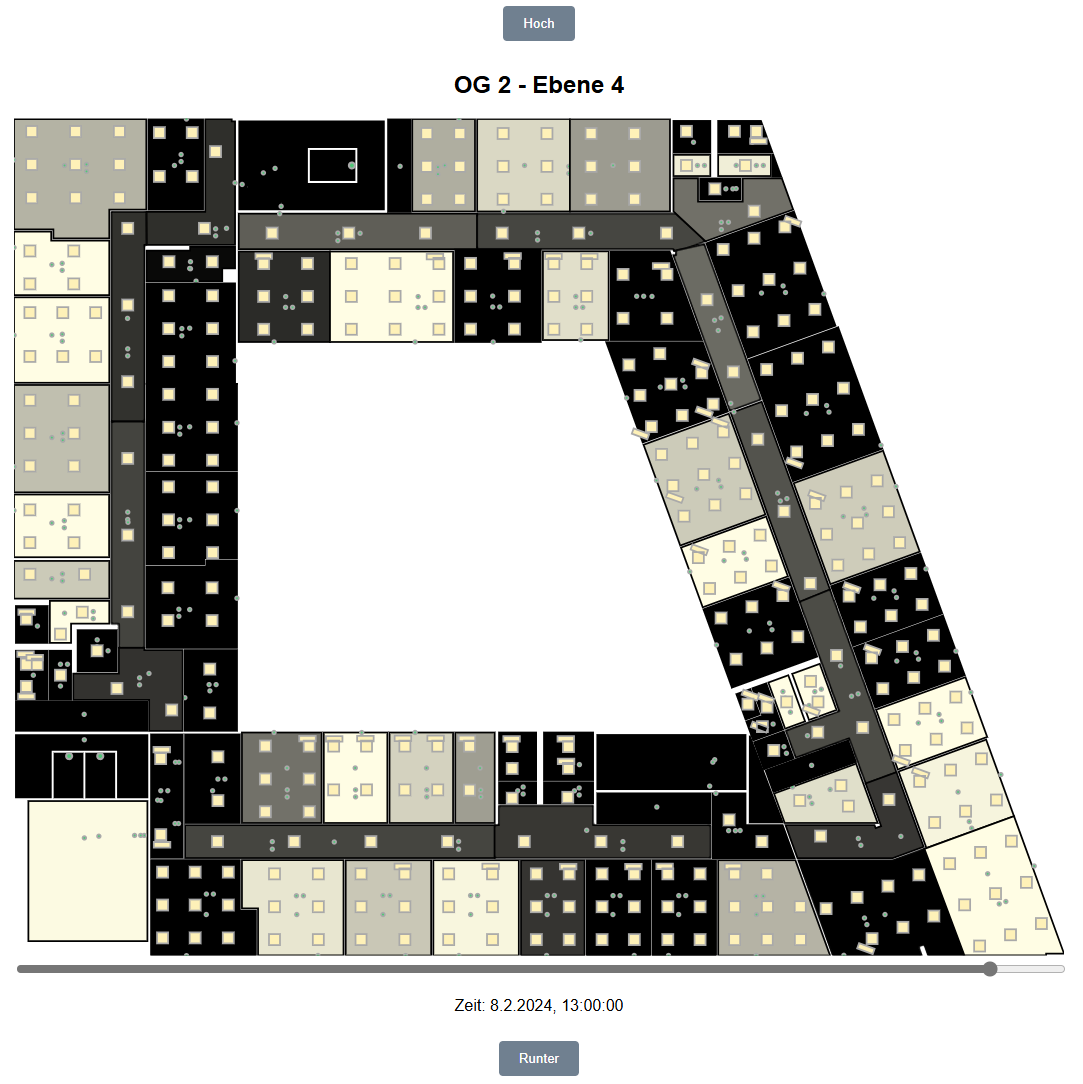
Visualization
The Guard is a digital twin of the KNX building. This allows you to see on a screen from a central location which device is currently doing what and where malfunctions are occurring.
Optimized Building Operations
Problems are not only identified, but also proactively resolved.
Energy Conservation
Targeted recommendations help minimize energy losses.
Improved Quality of Life
An optimal indoor climate enhances occupants' well-being.
Easy Integration
Quick and easy to set up thanks to the ETS project file.
How Air Quality Control Works
Sensors, central logic, actuators, building services, and user controls all work together to enable a needs-based response to changes in air quality.
.png?width=400&height=400&name=using%20(84).png)
.png?width=400&height=400&name=using%20(86).png)
Processes sensor data, evaluates defined thresholds, and handles the central response logic.
.png?width=400&height=400&name=using%20(95).png)
Transmits control commands to the connected systems and serves as the interface between the automation logic and the building automation system.
.png?width=400&height=400&name=using%20(94).png)
Window actuators, ventilation systems, or other suitable components carry out the defined response.
Displays status information and alerts, and allows for manual intervention when necessary, for example: “CO₂ limit exceeded. Please ventilate.”
Compatible with a variety of actuators and systems
The air quality control system is not limited to specific manufacturers or actuators. Depending on the project, various KNX actuators, window drives, ventilation systems, and other suitable components can be integrated.
Integrating Air Quality into the Project Appropriately
Talk to us about CO₂ detection, threshold logic, user prompts, and the project-specific integration of ventilation, window, and other room functions into your KNX-based room automation system.

